Building Foundations for Literacy
Music, Language and Listening Skills
Music, Language and Listening Skills
Building Foundations for Literacy
Before children learn to read and write, they need strong listening and language skills. They need to hear sounds clearly, recognise patterns and understand how words work. Music can support these early skills in a way that feels natural, joyful and playful.
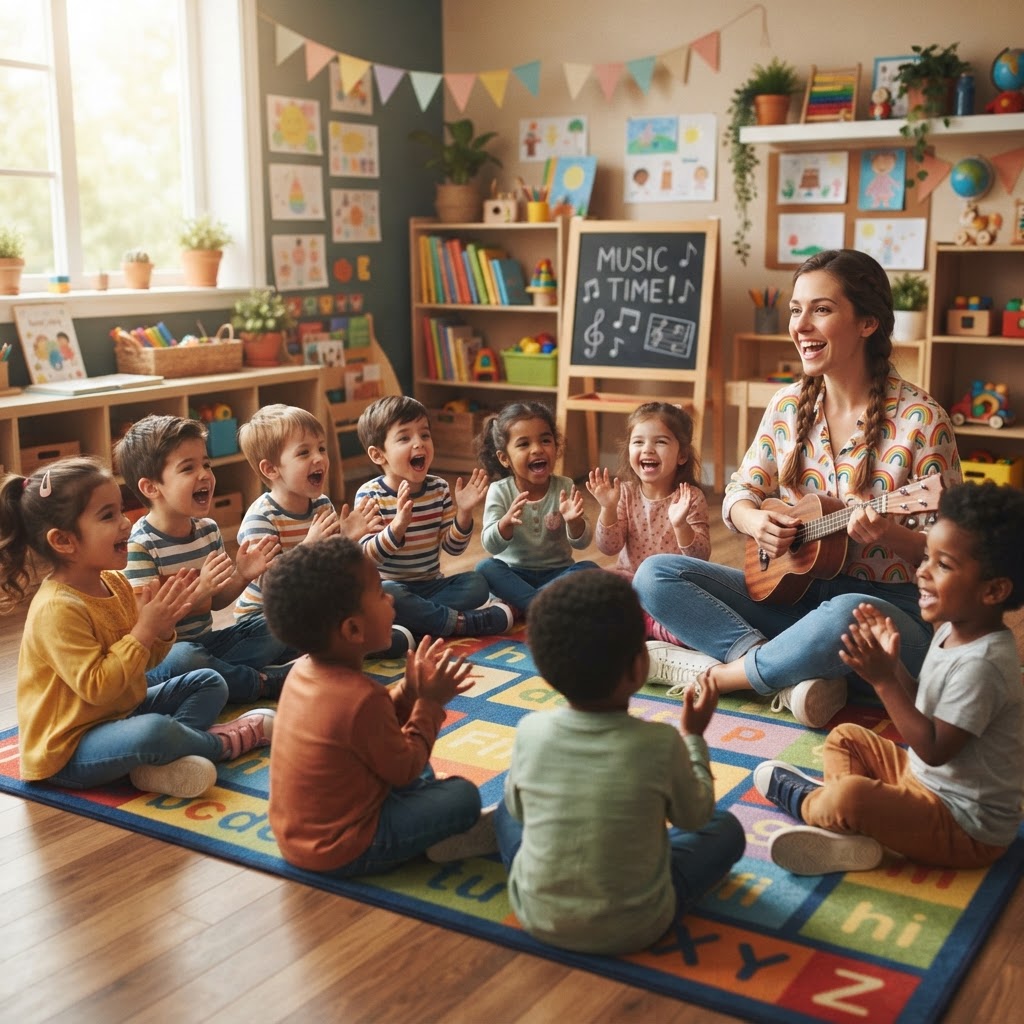
The Draw of Rhythm
Children are drawn to rhythm. They notice the beat in songs. They enjoy rhyming words. They remember repeated phrases. This is why songs and nursery rhymes are so useful in early childhood learning. They help children hear how language is built.
When a child sings a familiar song, they are practising much more than the tune. They are learning vocabulary, sentence structure, rhythm and sound patterns. They are also developing memory because they need to remember what comes next.
The Importance of Repetition
Repetition is especially important. Adults can sometimes become tired of the same songs, but children often want to hear them again and again. This is not wasted time. Repetition helps children master sounds and words. It gives them confidence because they know what is coming. It also allows them to join in more fully each time.
Singing as a Pathway
Music can also support children who are quieter or less confident with speech. Singing in a group can feel safer than speaking alone. A child who may not answer a question directly might still join in with a song, action or repeated phrase. This gives them another pathway into language.
Listening Games and Auditory Skills
Listening games are also valuable. Children can listen for high and low sounds, fast and slow beats or loud and soft music. They can copy clapping patterns, identify animal sounds or respond to changes in rhythm. These activities strengthen auditory discrimination, which is the ability to hear differences between sounds.
That skill matters because children need to hear the difference between sounds in words before they can confidently read and spell them. Music gives them practice without turning it into a formal lesson.
Action Songs and Meaning
Action songs add movement to the learning. When children point, clap, stomp, jump or use hand actions while singing, they are connecting words with meaning. This helps children understand language more deeply because they are using their whole body to learn.
Swaggie Kids has long combined music, education and Aussie culture in a way that suits young children. This matters because children learn best when they are actively involved. Sitting still and listening has its place, but early learners need to sing, move, copy, respond and participate.
Music in Daily Learning
Music gives educators and parents a practical way to build language every day. A song can introduce new words. A rhyme can teach sound patterns. A rhythm activity can help children hear syllables. A transition song can teach listening and following instructions.
The best part is that children do not usually realise how much they are learning. To them, it feels like fun. To the adults who understand child development, it is also a powerful foundation for future literacy.