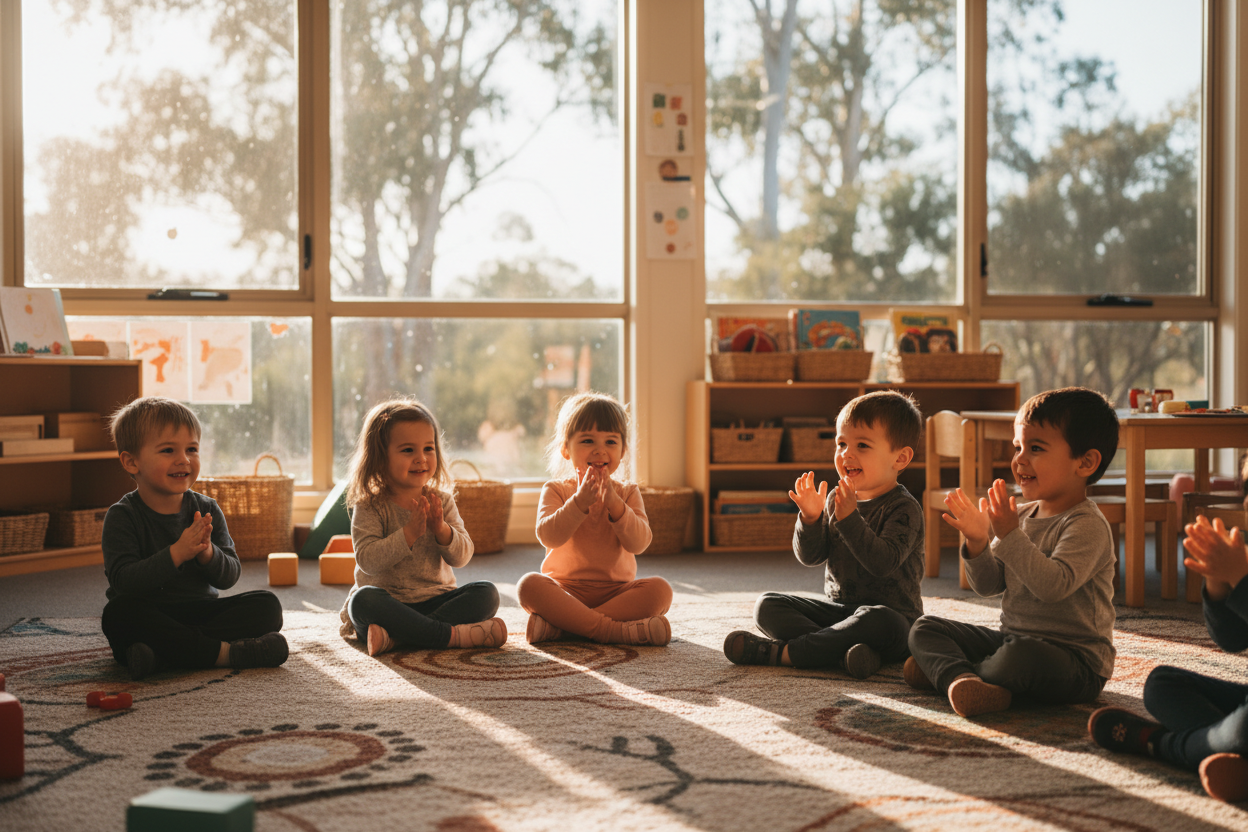
Understanding the Importance of Music in the Development of Children
Music and Routine
Let's face it: all of us do not like to be told what to do. Children are no different.
Music can be the perfect vehicle for young minds accepting instruction. Music and songs can help children follow the routine of the environment in which they find themselves.
Music should never be seen as an 'extra' or a subject on its own to pursue only at a particular time. It should incorporate itself into every part of the day. Whilst listening to music and singing songs at transition times, you are also providing children with many learning opportunities.
Short, Frequent, Often
This is an important mathematical strategy used in many schools, where activities are constantly repeated throughout the day for two or three minutes.
For example, counting to ten whilst putting toys away — you could use this strategy with music by playing a song about numbers which is repeated many times during the day. (Of course, the song can be on any topic you feel might benefit the children in your care.)
Not just playing a particular piece of music that alerts children what to do, but a particular song they can sing whilst performing less desirable tasks, will put them in a good mood and make the task more enjoyable. Clean-up songs alert the children that it's time to pack up, and if they can do so whilst singing, it will make the task more pleasurable and seem to go faster. As a benefit, the teacher does not need to remind them or ask them over and over again, as they will perform the task happily for as long as the music is on.
In your daycare centre or at home, you can use music to signal a transition from one activity to another. Examples include playing quiet music to introduce nap-time; or using loud, energetic music to get children moving and motivated for outdoor play.
Songs can also be used to keep children interested and well-behaved whilst they are learning to be patient in waiting for the next activity to begin.