Making every incursion earn its place
If Every Dollar Has to Count, What Should an Early Learning Incursion Actually Deliver?
If Every Dollar Has to Count, What Should an Early Learning Incursion Actually Deliver?
When budgets are tight, every decision matters. Centre directors still want to give children rich, meaningful experiences, but every outside program now has to justify its place. An incursion cannot simply fill an hour or entertain the children. It should support learning, engage the children and add something worthwhile to the work educators are already doing every day.
That is where music can be far more powerful than it first appears.
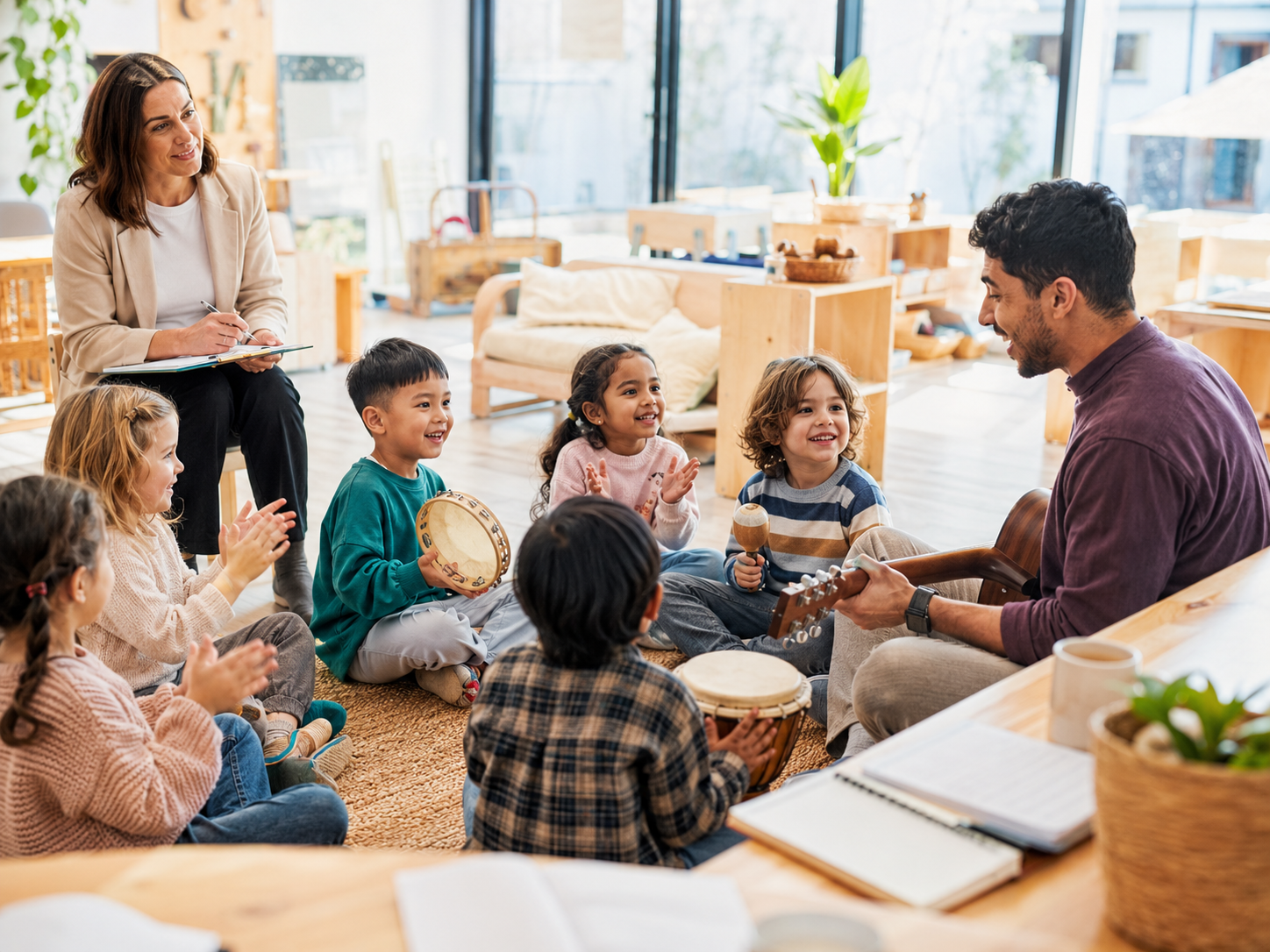
The Problem: There Is Less Room for “Just Entertainment”
Early learning centres have always had to make careful choices, but when funding is under pressure those choices become even harder.
You may look at every incursion, activity or visiting program and ask a very reasonable question:
Is this genuinely worth it?
That question deserves a proper answer.
A program may look good on the calendar. The children may enjoy it. Parents may like seeing the photos. Enjoyment matters, but enjoyment alone is not enough when every program is competing for limited time and money.
A worthwhile program should give children opportunities to listen, think, move, communicate, remember, respond and participate.
It should complement what educators are already doing rather than simply interrupting the day with an isolated activity.
This is one of the reasons we believe music deserves to be viewed differently.
Music is not simply an extra that sits outside learning. When it is delivered well, music becomes a vehicle for learning.
A child who follows a beat is listening and concentrating.
A child who remembers the next action in a song is using memory and sequencing.
A child who waits for their turn with an instrument is practising patience, self-control and social awareness.
A child who sings new words is developing language.
A child who copies a rhythm is recognising patterns.
A child who dances, claps or plays percussion is developing coordination and body awareness.
All of that can happen inside one joyful music session.
The Bigger Problem: Children Need to Be Part of the Experience
Young children learn by moving, listening, copying, experimenting, repeating and joining in.
When children are expected to sit and watch for too long, some remain engaged, but others quickly drift away. Educators can then find themselves managing restless children instead of sharing in the experience.
The strongest learning experiences give children something to do.
They clap the pattern.
They shake the instrument.
They move to the rhythm.
They listen for the change.
They remember what comes next.
They sing the words.
They wait for the cue.
They try again.
Those moments can look like play from the outside, but they are filled with learning.
This is where a carefully designed music program becomes so valuable. Children get to practise important skills without the experience feeling like a lesson.
The child is not thinking, “I am developing my concentration.”
They are thinking, “I want to get this rhythm right.”
They are not thinking, “I am working on language and memory.”
They are thinking, “I know what comes next.”
They are not thinking, “I am improving my coordination.”
They are thinking, “Look what I can do.”
That difference matters because children are often most receptive to learning when they are actively involved.
What Happens When Children Are Only Watching?
Every educator has seen a visiting activity that struggles to connect with the whole group.
A presenter arrives with a fixed plan. The children are expected to sit, watch and follow along. A few are fascinated. Others become restless. Some lose interest.
The program may still be entertaining, but its learning value is limited if the children are mainly spectators.
That is not what we want from music.
At Swaggie Kids, we believe children should not simply watch learning happen. We want them involved, challenged and encouraged to respond.
That means the person delivering the session needs to read the room. One group may be ready for a more complex rhythm challenge. Another may need more movement. Some children respond immediately to singing. Others suddenly come alive when they are handed an instrument.
A strong early learning program needs enough structure to have purpose, but enough flexibility to respond to the children in front of it.
The Solution: Use Music as a Learning Tool
When we deliver Swaggie Kids, our goal is not to put on a show for children.
Our goal is to involve them.
We use music, rhythm, movement, singing and instruments to create sessions where children are listening, responding, remembering and participating.
The learning is woven into the fun.
That means one music session can support concentration, communication, memory, pattern recognition, coordination, confidence, creativity, social participation and emotional expression.
It can also complement the learning already taking place within your centre and support the kind of play-based, responsive learning encouraged through the Early Years Learning Framework.
The external program should not feel disconnected from your curriculum.
It should add to it.
The Most Important Question Is Not “Did They Enjoy It?”
Enjoyment is important. Children should have fun.
A better question is:
What were the children practising while they were enjoying it?
Were they listening carefully?
Were they following instructions?
Were they remembering a sequence?
Were they trying something unfamiliar?
Were they participating with others?
Were they building confidence?
Were they using their bodies in new ways?
Were they experiencing rhythm, language and pattern?
Were they succeeding at something?
Those are the moments that give an incursion lasting value.
A child may not remember the exact song they sang months later, but the skills they practised through music can continue to support them in other areas of learning.
That is why we see music as part of whole-child development rather than simply entertainment.
A Good Program Should Support Educators Too
Educators are already planning, observing, documenting, supporting individual needs and creating learning opportunities every day.
A visiting program should not create more work.
Ideally, educators should be able to watch children engage, notice how individual children respond and perhaps pick up ideas they can use later.
Music gives them plenty to observe.
A rhythm activity can become a listening activity.
A song can become a language activity.
Movement can support gross motor development.
Instrument play can strengthen coordination and turn-taking.
Repetition can reinforce memory.
Music can also offer another way to engage children who may not respond as readily to other activities.
When Budgets Are Tight, Value Matters More Than Ever
We understand that centres cannot say yes to every program they would like to offer.
That is why the real question is not whether an incursion is nice to have.
The question is whether it earns its place.
Does it engage the children?
Does it support learning?
Does it complement your curriculum?
Does it encourage participation rather than passive watching?
Does it give children opportunities to practise skills they will use again?
Does it contribute something educators and families can recognise as valuable?
If the answer is yes, the program becomes much easier to justify because it is not simply another activity on the calendar.
It becomes part of the learning environment.
What Do We Want Children to Take With Them?
Years from now, children may not remember every song they sang at childcare.
They may not remember who handed them their first rhythm stick or who encouraged them to join in.
What they can carry forward are the skills, confidence and positive experiences built during those early years.
They can carry forward the confidence to participate.
The ability to listen.
The willingness to try.
The joy of learning something new.
The feeling of being included.
The experience of succeeding as part of a group.
That is what we want Swaggie Kids to contribute.
We want children to have fun, but we also want that fun to mean something.
If you are reviewing what your centre offers this term, perhaps the most useful question is not, “What activity should we add?”
It may be:
“What experience will give our children the greatest value from the time we already have with them?”
For us, music belongs very high on that list.
If you are looking for a program that gives children more than a performance, we would be pleased to show you what a Swaggie Kids session can bring to your centre.