How musical training can support focus, memory, language, coordination and emotional wellbeing
Could Children Be Missing Important Brain Development Opportunities Without Music?
Could Children Be Missing Important Brain Development Opportunities Without Music?
Children are expected to concentrate, communicate, remember instructions, manage their emotions and coordinate their movements from a very young age. However, many children do not receive enough opportunities to practise all of these skills in a way that feels natural and enjoyable.
When children struggle with focus, listening, memory or coordination, learning can become frustrating. They may find it harder to follow instructions, join group activities, express themselves or feel confident when trying something new. These difficulties do not mean a child lacks ability. They may simply need more opportunities to strengthen the parts of the brain involved in learning and development.
This is where musical training can help.
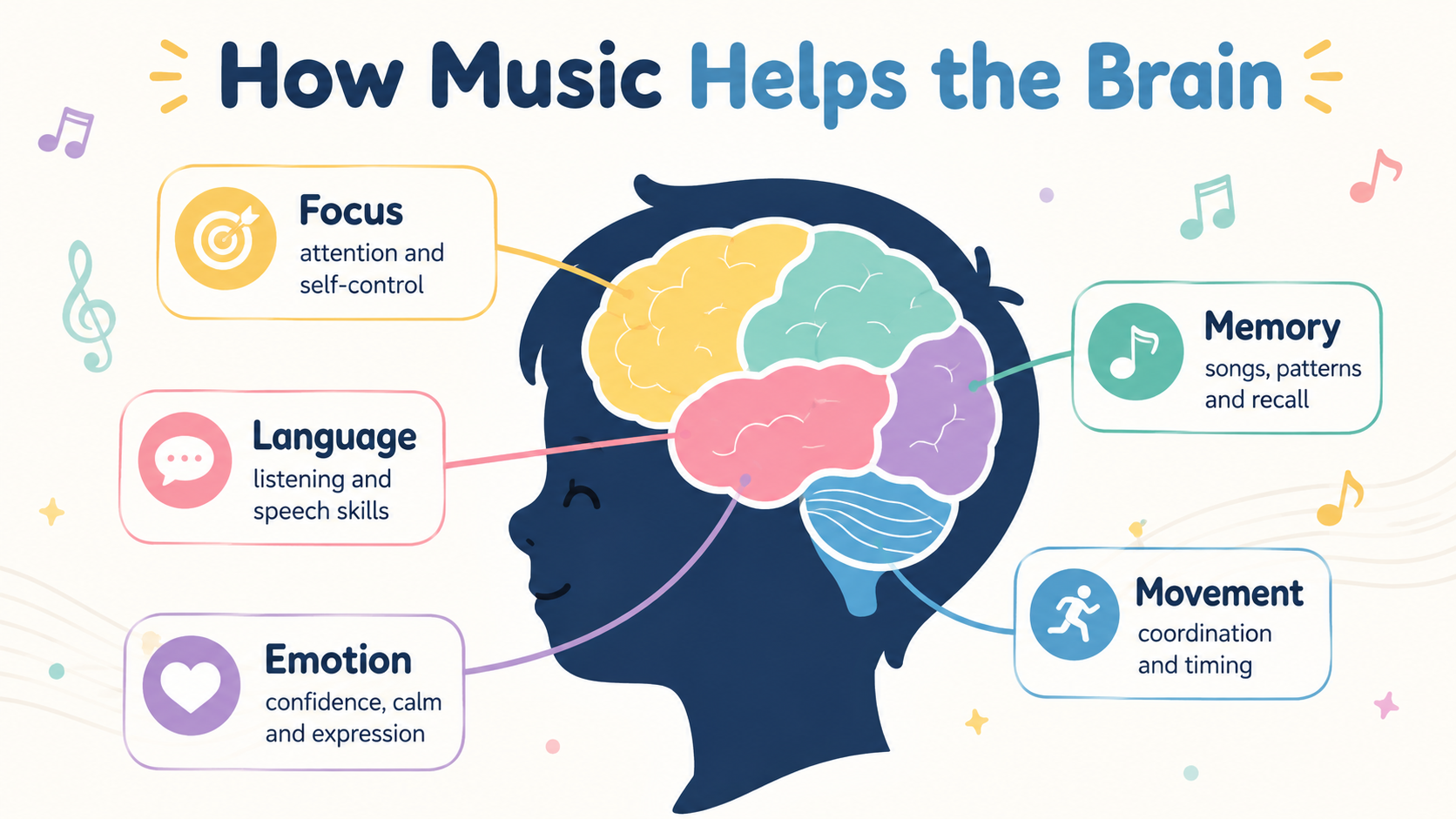
Music engages many areas of the brain at the same time. Singing, keeping a beat, remembering a melody and playing instruments can support concentration, coordination, memory, language development, creativity and emotional wellbeing.
How Does Music Support Focus and Self-Control?
Have you ever watched a child try to keep a steady beat while listening to instructions and watching what other people are doing?
This simple activity requires a surprising amount of brainpower.
The frontal lobe helps with planning, decision-making, concentration and self-control. Musical activities encourage children to listen carefully, remember what comes next and control their movements so they can respond at the right time.
When children practise stopping, starting, waiting and following a rhythm, they are also practising skills that can support classroom learning and everyday behaviour.
Can Musical Training Improve Language and Listening Skills?
Why do children involved in music often become more aware of sounds, words and speech patterns?
The temporal lobe is responsible for processing sound, language and memory. Musical activities help children notice differences in pitch, rhythm, volume and tone.
Singing songs can introduce new words and sentence patterns. Listening games can help children recognise changes in sound. Rhythm activities can also strengthen their awareness of syllables and speech patterns.
These experiences may help children become more confident listeners and communicators.
How Does Music Help Coordination and Movement?
Why can playing even a simple instrument feel challenging at first?
Musical performance requires the brain and body to work together. A child may need to watch an instrument, listen to a sound, move their hands and keep time at the same moment.
The parietal lobe helps the brain process sensory information and understand movement and space. The cerebellum supports balance, timing, coordination and muscle memory.
Playing instruments, clapping patterns and moving to music can help children develop hand-eye coordination, fine motor skills and body awareness. These skills can also support drawing, writing, sport and other physical activities.
Can Music Support Visual Learning?
What happens when children begin recognising musical symbols, patterns or cues?
The occipital lobe helps process visual information. When children follow picture cards, watch a teacher's movements or begin learning simple musical symbols, they are connecting visual information with sound and movement.
Recognising patterns is an important part of both music and learning. It can support early literacy, numeracy and problem-solving skills.
Children do not need to read formal sheet music to gain these benefits. Following colours, shapes, pictures and movement cues can also provide valuable visual learning experiences.
Does Music Help Build Memory?
Why can children remember a song long after they have forgotten an ordinary instruction?
Music gives information a pattern. Rhythm, repetition and melody can make words and ideas easier to remember.
The hippocampus plays an important role in learning and long-term memory. Remembering lyrics, actions, rhythms and the order of a song helps children practise storing and recalling information.
This is why music can be useful when teaching routines, numbers, language, instructions and new concepts.
Does Music Encourage Both Sides of the Brain to Work Together?
Does music involve creativity or logical thinking?
It involves both.
Music requires children to recognise patterns, follow instructions and count beats. It also gives them opportunities to imagine, explore and express themselves.
The corpus callosum connects the left and right sides of the brain. Activities that combine listening, movement, memory and creativity encourage communication between different areas of the brain.
This can support flexible thinking and help children approach problems in different ways.
How Does Music Affect Emotions and Wellbeing?
Why can one song make a child feel excited while another helps them feel calm?
Music can influence mood, energy and emotional responses. Enjoyable musical activities can activate the brain's reward system and support the release of chemicals associated with motivation and pleasure.
Music can also give children a safe way to express feelings. Singing, movement and instrument play can help release energy, reduce tension and encourage participation.
Calmer musical experiences may also support relaxation, mindfulness and emotional regulation.
Is Musical Training Only Helpful for Children Who Want to Become Musicians?
Does a child need to become a skilled musician to benefit from music?
No.
The purpose of early musical experiences is not necessarily to produce professional musicians. The greater value is in giving children opportunities to listen, participate, experiment and learn.
Every time a child follows a beat, remembers a song, tries an instrument or moves in time with music, they are using important areas of the brain.
At Swaggie Kids, we believe music should be active, practical and enjoyable. Children are not expected to sit quietly and watch a performance. They are encouraged to participate, play instruments, explore rhythm and experience how music works.
Why Does Musical Training Matter?
Musical training matters because it brings many different areas of development together in one experience.
Music can support memory, listening, language, concentration, movement, creativity and emotional wellbeing. It encourages children to use their minds and bodies together while building confidence through participation.
Learning music is about much more than learning songs or instruments. It helps children practise skills that can support learning throughout childhood and across their lives.